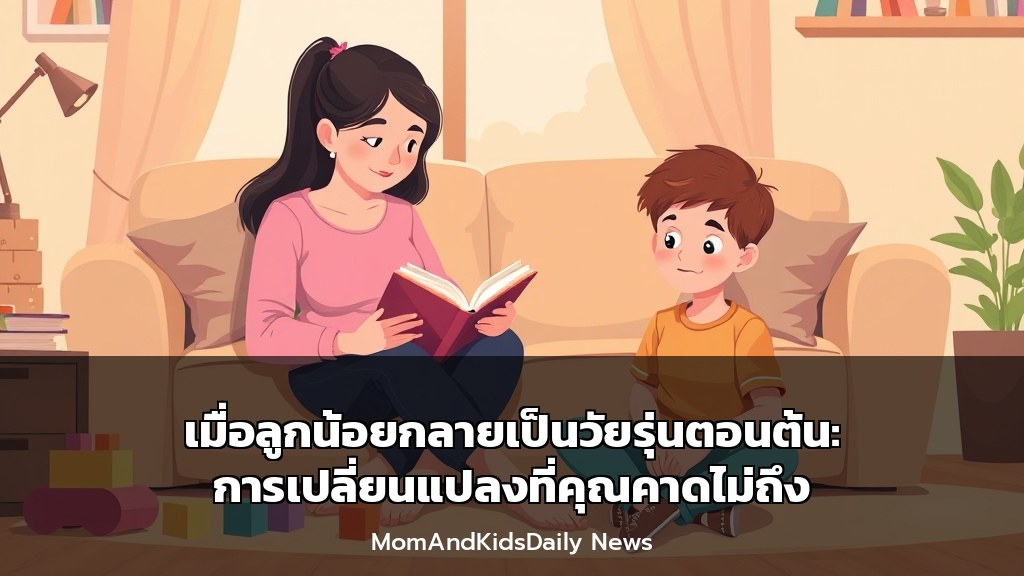
เมื่อลูกน้อยกลายเป็นวัยรุ่นตอนต้น: การเปลี่ยนแปลงที่คุณคาดไม่ถึง
คุณพ่อคุณแม่หลายคนอาจเคยได้ยินว่าช่วงวัยรุ่นตอนต้น (tween) คือช่วงที่ลูกกลับมาเป็นเหมือนเด็กเล็กอีกครั้ง แต่ความจริงแล้วมันลึกซึ้งกว่านั้นมาก การเปลี่ยนแปลงทางร่างกาย อารมณ์ และสังคมที่เกิดขึ้นในช่วงอายุ 8-12 ปี เป็นเสมือนการเกิดใหม่ของทั้งลูกและตัวคุณในฐานะพ่อแม่
ทำไมวัยรุ่นตอนต้นถึงเหมือน “เด็กเล็ก” อีกครั้ง?
สาเหตุหลักมาจากการเปลี่ยนแปลงครั้งใหญ่ในสมองและฮอร์โมน
– เหมือนกับเด็กวัยหัดเดินที่กำลังเรียนรู้โลกใหม่ วัยรุ่นตอนต้นก็กำลังปรับตัวกับการรับรู้ตนเองและสังคมที่เปลี่ยนไป
– ความต้องการพึ่งพาพ่อแม่ยังคงสูง แต่แสดงออกผ่านการต่อต้านและทดสอบขอบเขต แทนที่จะร้องไห้งอแง
– อารมณ์แปรปรวนง่าย เกิดจากความไวต่อสิ่งเร้าที่เพิ่มขึ้นและการค้นหาตัวตน
เคล็ดลับการเลี้ยงดูสำหรับพ่อแม่
- ให้พื้นที่แต่ยังคงอยู่ใกล้: ยอมรับความต้องการอิสระของลูก แต่ยังคงเป็นฐานที่ปลอดภัย
- ฟังมากกว่าสอน: เมื่อลูกแสดงอารมณ์รุนแรง ให้ฟังก่อน ไม่รีบตัดสินหรือให้คำแนะนำ
- เข้าใจว่าการลองผิดลองถูกคือปกติ: การเปลี่ยนบุคลิกภาพหรือความสนใจบ่อยครั้งเป็นส่วนหนึ่งของการค้นหาตัวตน
- สร้างกิจวัตรที่ยืดหยุ่น: เปิดโอกาสให้ลูกมีส่วนร่วมในการกำหนดกฎกติกาภายในบ้าน
- ดูแลสุขภาพจิตของตัวเองด้วย: การเปลี่ยนแปลงของลูกส่งผลต่อคุณเช่นกัน อย่าลืมให้เวลากับตัวเอง
สิ่งที่ควรสังเกตและเมื่อต้องกังวล
| ปกติ | ควรปรึกษาผู้เชี่ยวชาญ |
|——|———————-|
| อารมณ์แปรปรวนเป็นครั้งคราว โดยเฉพาะช่วงสอบหรือทะเลาะกับเพื่อน | อารมณ์เศร้าหรือโกรธรุนแรงที่กินเวลานานหลายสัปดาห์ |
| ทดสอบกฎและแสดงความต้องการอิสระ | ถอนตัวจากกิจกรรมหรืองานอดิเรกที่เคยชอบ |
| พูดถึงเพื่อนมากขึ้น | แยกตัวออกจากสังคมโดยสิ้นเชิง ไม่สนใจเพื่อนหรือครอบครัว |
| ความสนใจเปลี่ยนไปตามกระแส | มีพฤติกรรมเสี่ยง หรือพูดถึงการทำร้ายตัวเอง |
คำแนะนำจากผู้เชี่ยวชาญ: การเปลี่ยนแปลงของวัยรุ่นตอนต้นไม่ใช่แค่เรื่องของลูก แต่เป็นการปรับตัวของทั้งครอบครัว จงให้ความรักที่ไม่มีเงื่อนไข พร้อมกับขอบเขตที่ชัดเจน และที่สำคัญที่สุดคือ ฟังด้วยหัวใจที่เปิดกว้าง
FAQ
Full English Translation
When your child becomes a tween: the unexpected changes you didn’t see coming
Many parents have heard that the tween years (ages 8-12) are like having a toddler again, but the truth is much deeper. The physical, emotional, and social changes during this period are like a rebirth for both child and parent.
Why tweens are like toddlers again
– Just as a toddler is learning about the world, a tween is adjusting to a new sense of self and social awareness.
– The need for parental support is still high, but it’s expressed through boundary-testing rather than crying.
– Mood swings come from increased sensitivity and identity exploration.
Parenting tips
– Give space but stay close: respect their need for independence while being a safe base.
– Listen before teaching: when emotions are high, listen first without judging or advising.
– Understand experimentation is normal: frequent changes in personality or interests are part of finding identity.
– Create flexible routines: involve your child in setting household rules.
– Take care of yourself too: your child’s changes affect you as well.
What’s normal vs. when to worry
| Normal | Seek professional help |
|——–|———————–|
| Occasional moodiness, especially during exams or friend conflicts | Persistent sadness or anger lasting weeks |
| Testing rules and wanting independence | Withdrawal from favorite activities or friends |
| Talking more about friends | Complete social isolation |
| Changing interests with trends | Risk-taking behavior or self-harm talk |
Expert advice: The tween years are not just about the child changing; it’s a family adjustment. Offer unconditional love with clear boundaries, and most importantly, listen with an open heart.
Citation:
– Child Mind Institute: What Parents Should Know About Tweens (https://childmind.org/article/what-parents-should-know-about-tweens/)