
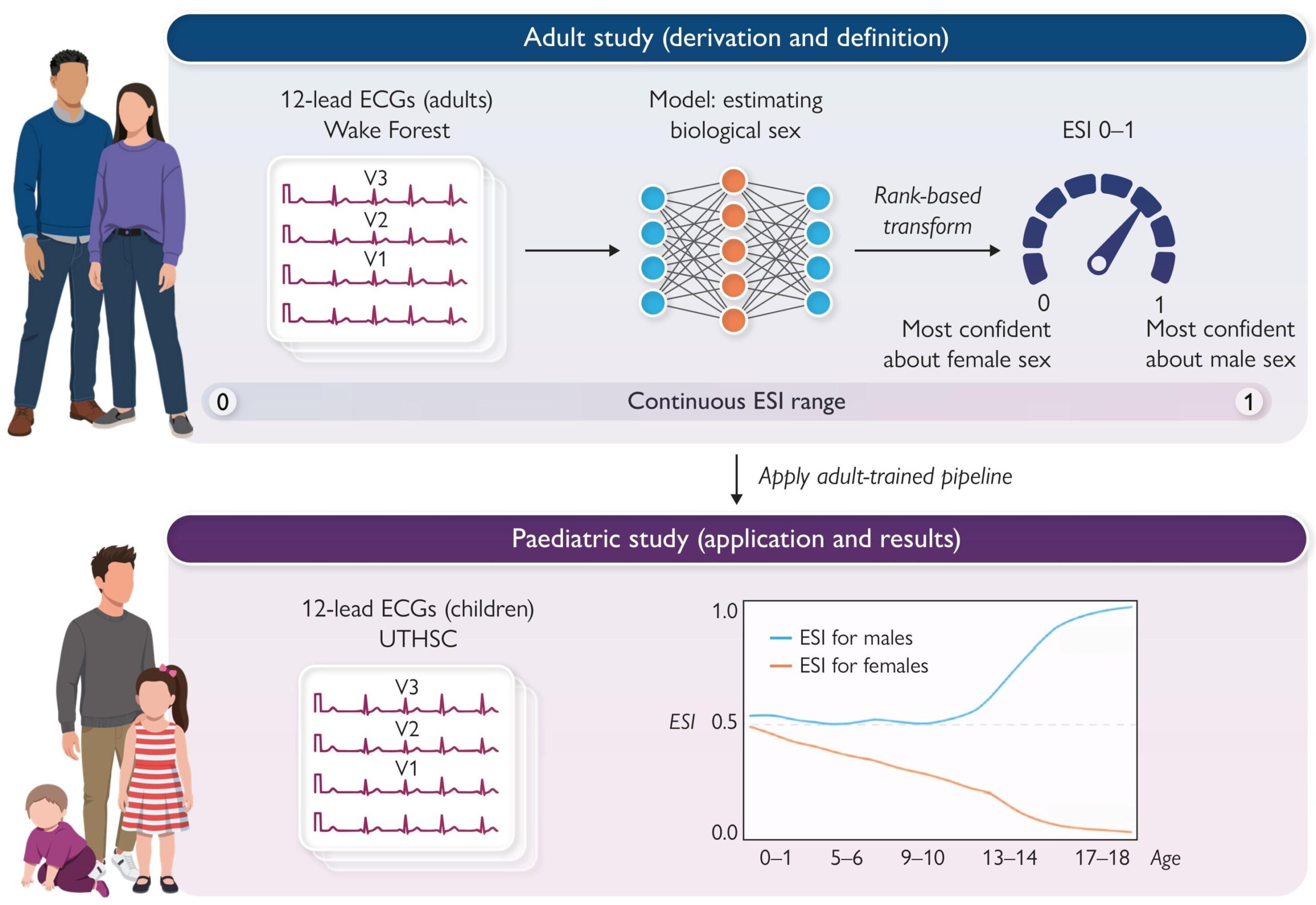
เทคโนโลยี AI กำลังปฏิวัติวงการกุมารเวชศาสตร์หัวใจ ด้วยการวิเคราะห์คลื่นไฟฟ้าหัวใจ (ECG) ซึ่งเป็นการตรวจพื้นฐานราคาถูกและทำได้ง่าย แต่ซ่อนข้อมูลสำคัญไว้มากมาย ทีมวิจัยจาก CHAI Lab โรงพยาบาลเด็กบอสตัน ได้พัฒนาโมเดล AI ที่สามารถอ่านค่า ECG ของเด็กได้แม่นยำเทียบเท่า หรือดีกว่าแพทย์ผู้เชี่ยวชาญ โดยเฉพาะในโรคลึกลับอย่าง Wolff-Parkinson-White (WPW) syndrome และ long QT syndrome ที่เป็นสาเหตุของภาวะหัวใจหยุดเต้นเฉียบพลันในเด็ก
ทำไม AI ถึงสำคัญต่อสุขภาพหัวใจเด็ก?
- ตรวจพบสิ่งที่ตาเปล่ามองไม่เห็น: AI สามารถจับสัญญาณอ่อนๆ ที่แพทย์มนุษย์มองข้าม เช่น การบีบตัวผิดปกติของหัวใจห้องล่าง (ventricular dysfunction) จากข้อมูล ECG เพียงอย่างเดียว โดยไม่ต้องพึ่งอัลตราซาวนด์หัวใจ
- ลดความเหลื่อมล้ำทางการแพทย์: ปัจจุบันการเข้าถึงแพทย์หัวใจเด็กผู้เชี่ยวชาญยังมีจำกัดทั่วโลก AI-ECG จะช่วยให้โรงพยาบาลในชนบทหรือพื้นที่ห่างไกลสามารถคัดกรองโรคหัวใจเด็กได้อย่างมีประสิทธิภาพ
- แม่นยำกว่าโปรแกรมเชิงพาณิชย์: การศึกษาที่ตีพิมพ์ใน JACC: Clinical Electrophysiology พบว่า AI-ECG มีประสิทธิภาพเหนือกว่าซอฟต์แวร์ ECG ทั่วไปในการตรวจพบ WPW (AUROC 0.99) และ prolonged QTc (AUROC 0.96)
- ไม่เจ็บ ไม่ต้องเตรียมตัว: การตรวจ ECG เป็นเพียงการติดเซ็นเซอร์ขนาดเล็กบนร่างกายเด็ก ไม่ต้องใช้ยาสลบ ไม่มีรังสี เหมาะสำหรับเด็กทุกวัยรวมถึงทารกแรกเกิด
คำแนะนำสำหรับคุณพ่อคุณแม่
- อย่าตกใจหากลูกมี ECG ผิดปกติ: ให้ปรึกษาแพทย์โรคหัวใจเด็กเพื่อทำการตรวจยืนยันเพิ่มเติม เช่น Echocardiogram
- สังเกตอาการเสี่ยง: หากลูกมีอาการเหนื่อยง่ายเวลาดูดนมหรือเล่น หน้าซีด ตัวเขียว หรือเป็นลมหมดสติ ควรรีบพาไปพบแพทย์
- ถามถึง AI-ECG: หากโรงพยาบาลมีบริการนี้ สามารถใช้เป็นเครื่องมือคัดกรองเบื้องต้นที่มีความแม่นยำสูง
- การตรวจปกติช่วยชีวิต: เด็กหลายคนที่เป็น WPW หรือ long QT syndrome ไม่มีอาการใดๆ จนกว่าจะเกิดเหตุการณ์รุนแรง การตรวจ ECG เป็นระยะจึงสำคัญมาก
- เทคโนโลยีไม่แทนที่หมอ: AI เป็นเพียงเครื่องมือช่วยวินิจฉัย การตัดสินใจรักษายังคงต้องอาศัยดุลยพินิจของแพทย์ผู้เชี่ยวชาญร่วมกับประวัติและการตรวจร่างกาย
Full English Translation
AI Detects Heart Conditions in Children More Accurately Than Pediatric Cardiologists
Artificial intelligence is revolutionizing pediatric cardiology by analyzing electrocardiograms (ECG) — a simple, low-cost, widely available test that holds hidden insights. Researchers at the CHAI Lab at Boston Children’s Hospital have developed an AI model that interprets children’s ECGs with accuracy equal to or exceeding that of expert physicians, particularly for rare conditions such as Wolff-Parkinson-White (WPW) syndrome and long QT syndrome, which can lead to sudden cardiac arrest.
Why AI matters for children’s heart health
- Detects what the human eye cannot see: AI can pick up subtle signals that doctors miss, such as ventricular dysfunction, from ECG data alone, without requiring an echocardiogram.
- Reduces healthcare disparities: Access to pediatric cardiology specialists is limited globally. AI-ECG can help rural or remote hospitals screen for heart disease effectively.
- Outperforms commercial software: A study published in JACC: Clinical Electrophysiology found the AI-ECG model superior to standard ECG software in detecting WPW (AUROC 0.99) and prolonged QTc (AUROC 0.96).
- Painless and non-invasive: ECG only requires small sensors on the body — no sedation or radiation, suitable for all ages including newborns.
Tips for parents
- Don’t panic if your child’s ECG is abnormal: Consult a pediatric cardiologist for confirmation with additional tests like an echocardiogram.
- Watch for warning signs: If your child tires easily while feeding or playing, appears pale, has blue lips, or faints, seek medical help immediately.
- Ask about AI-ECG: If available at your hospital, it can serve as a highly accurate screening tool.
- Routine screening saves lives: Many children with WPW or long QT syndrome have no symptoms until a severe event. Periodic ECGs are crucial.
- Technology complements, not replaces, doctors: AI is a diagnostic aid. Treatment decisions still rely on expert clinical judgment combined with history and physical exams.