
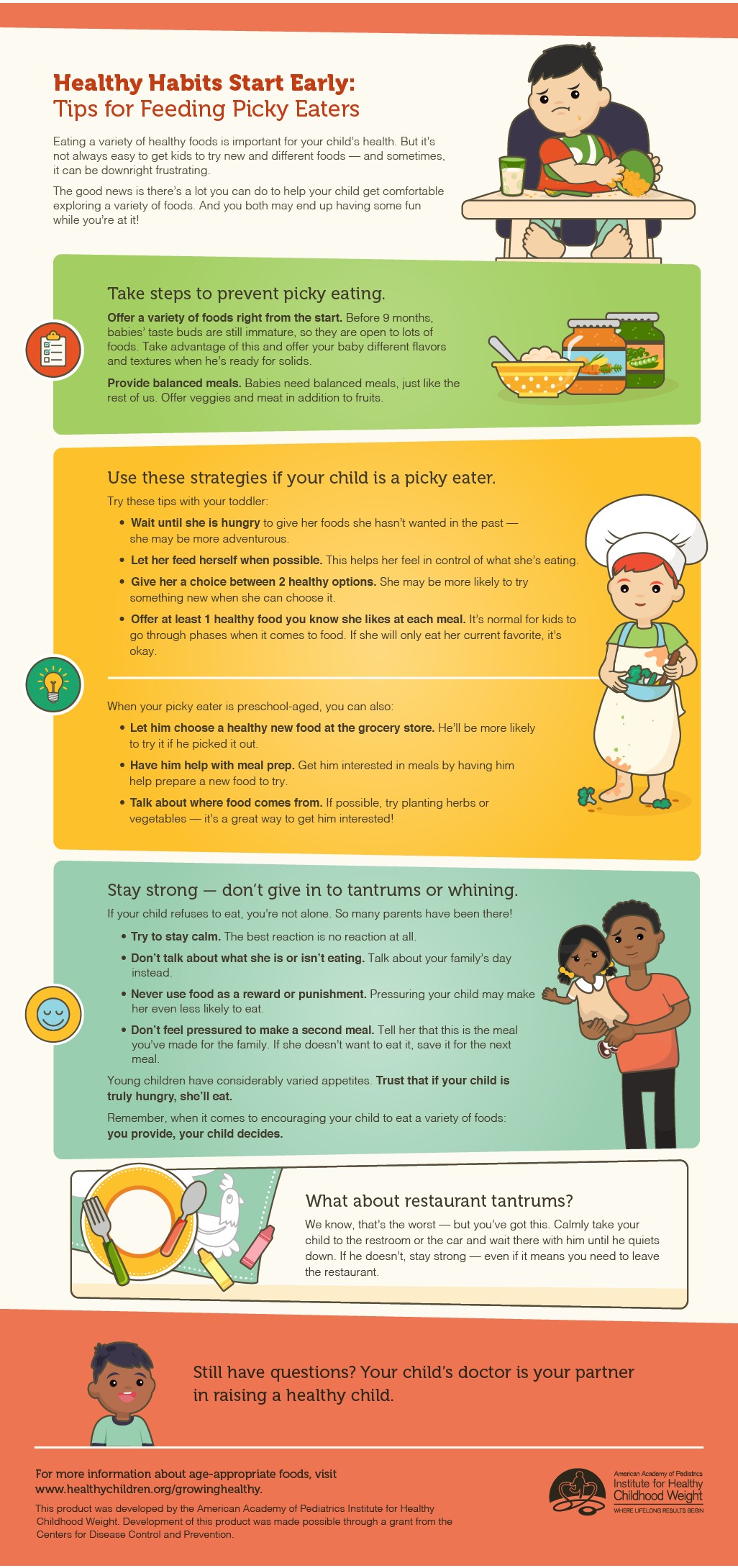
คำแนะนำสำหรับพ่อแม่มือใหม่ในการรับมือกับเด็กเลือกกิน
การที่เด็กเล็กมีพฤติกรรมเลือกกินเป็นเรื่องปกติของพัฒนาการ คุณพ่อคุณแม่ไม่ต้องกังวลมากเกินไป สิ่งสำคัญคือการเสนออาหารที่มีประโยชน์ และค่อยๆ ปรับพฤติกรรมการกินของลูกอย่างอดทนและเข้าใจ
การวิเคราะห์เชิงลึกเกี่ยวกับพัฒนาการเด็กและการเลี้ยงดู
- ธรรมชาติของเด็กเลือกกิน: เด็กวัยเตาะแตะมักจะกลัวอาหารใหม่ๆ (neophobia) และต้องการเวลาทำความรู้จักกับรสชาติและเนื้อสัมผัสใหม่ๆ นานถึง 10 ครั้งหรือมากกว่าก่อนที่จะยอมรับ
- บทบาทของครอบครัว: การกินข้าวร่วมกันเป็นครอบครัวโดยไม่มีสิ่งรบกวน เช่น ทีวีหรือมือถือ ช่วยสร้างบรรยากาศที่ดี และเปิดโอกาสให้เด็กได้เลียนแบบพฤติกรรมการกินที่ดีจากพ่อแม่
- การสร้างนิสัยระยะยาว: งานวิจัยชี้ให้เห็นว่าพฤติกรรมเลือกกินสามารถเริ่มต้นได้เร็วและติดตัวเด็กไปนาน ดังนั้นการเริ่มต้นป้องกันก่อนอายุ 2 ขวบจึงเป็นสิ่งสำคัญ
เทคนิคการเลี้ยงลูกที่ได้ผล
- เสิร์ฟอาหารแบบครอบครัว: ให้ลูกกินอาหารเดียวกับที่ทั้งครอบครัวกิน หลีกเลี่ยงการทำอาหารแยกสำหรับเด็กเพราะจะยิ่งส่งเสริมการเลือกกิน
- แนะนำอาหารซ้ำๆ: เสนออาหารใหม่ๆ ซ้ำหลายครั้ง (มากกว่า 10 ครั้ง) ในปริมาณน้อย และเว้นระยะประมาณ 1-2 สัปดาห์ก่อนเสนออีกครั้ง
- จับคู่รสชาติ: เสิร์ฟอาหารที่มีรสขมหรือเปรี้ยว (เช่น บรอกโคลี) คู่กับรสชาติที่เด็กชอบ (เช่น ชีสเค็ม) เพื่อเพิ่มโอกาสในการยอมรับ
- ให้เด็กมีส่วนร่วม: พาลูกไปเลือกซื้อวัตถุดิบ วางแผนเมนู หรือปลูกผักสวนครัวร่วมกัน เพื่อสร้างความคุ้นเคยและความสนใจในอาหาร
- ไม่บังคับหรือต่อรอง: หลีกเลี่ยงการบังคับให้กินหรือใช้อารมณ์ ให้พูดกับลูกว่า “ลูกกินได้เมื่อพร้อมนะ” เพื่อลดความกดดัน
สิ่งที่ควรจำ
หากคุณกังวลเกี่ยวกับโภชนาการของลูก ควรปรึกษากุมารแพทย์เพื่อตรวจสอบว่าได้รับสารอาหารครบถ้วนหรือไม่ โปรดจำไว้ว่าพฤติกรรมเลือกกินเป็นเพียงช่วงพัฒนาการตามธรรมชาติของเด็กเล็ก จงอดทนและค่อยๆ ชี้แนะลูกบนเส้นทางสู่การกินที่ดีต่อสุขภาพ
English Translation: Tips for Handling Picky Eaters and Building Healthy Eating Habits
It is normal for toddlers to go through a picky eating phase. Parents should not worry too much. The key is to offer healthy food choices and patiently guide your child’s eating behavior over time.
Deep Analysis on Child Development and Parenting
- Nature of Picky Eating: Toddlers often experience neophobia (fear of new foods) and need up to 10 or more exposures to a new food before accepting it.
- Role of Family: Sharing family meals without distractions like TV or phones creates a positive atmosphere and allows children to model healthy eating behaviors from their parents.
- Long-Term Habits: Research shows that picky eating can start early and persist, making early intervention before age 2 crucial.
Effective Parenting Techniques
- Serve Family-Style Meals: Let your child eat the same food as the rest of the family. Avoid making separate meals for the child, which can encourage pickiness.
- Reintroduce Foods Repeatedly: Offer new foods many times (over 10 times) in small amounts, waiting 1-2 weeks between attempts.
- Pair Flavors Strategically: Serve bitter or sour foods (like broccoli) with flavors toddlers naturally prefer (like salty cheese) to increase acceptance.
- Involve Your Child: Take children grocery shopping, let them help with meal planning, or grow vegetables together to build familiarity and interest.
- Avoid Force or Bribery: Don’t force your child to eat or clean their plate. Instead, say, “You can eat it when you’re ready,” to reduce pressure.
Remember: If you are concerned about your child’s diet, consult your pediatrician to ensure they get all necessary nutrients. Picky eating is a normal developmental stage. Be patient and gently guide your child toward healthy eating.
อ้างอิง / Citation: HealthyChildren.org – Picky Eaters. https://www.healthychildren.org/English/ages-stages/toddler/nutrition/Pages/Picky-Eaters.aspx

