
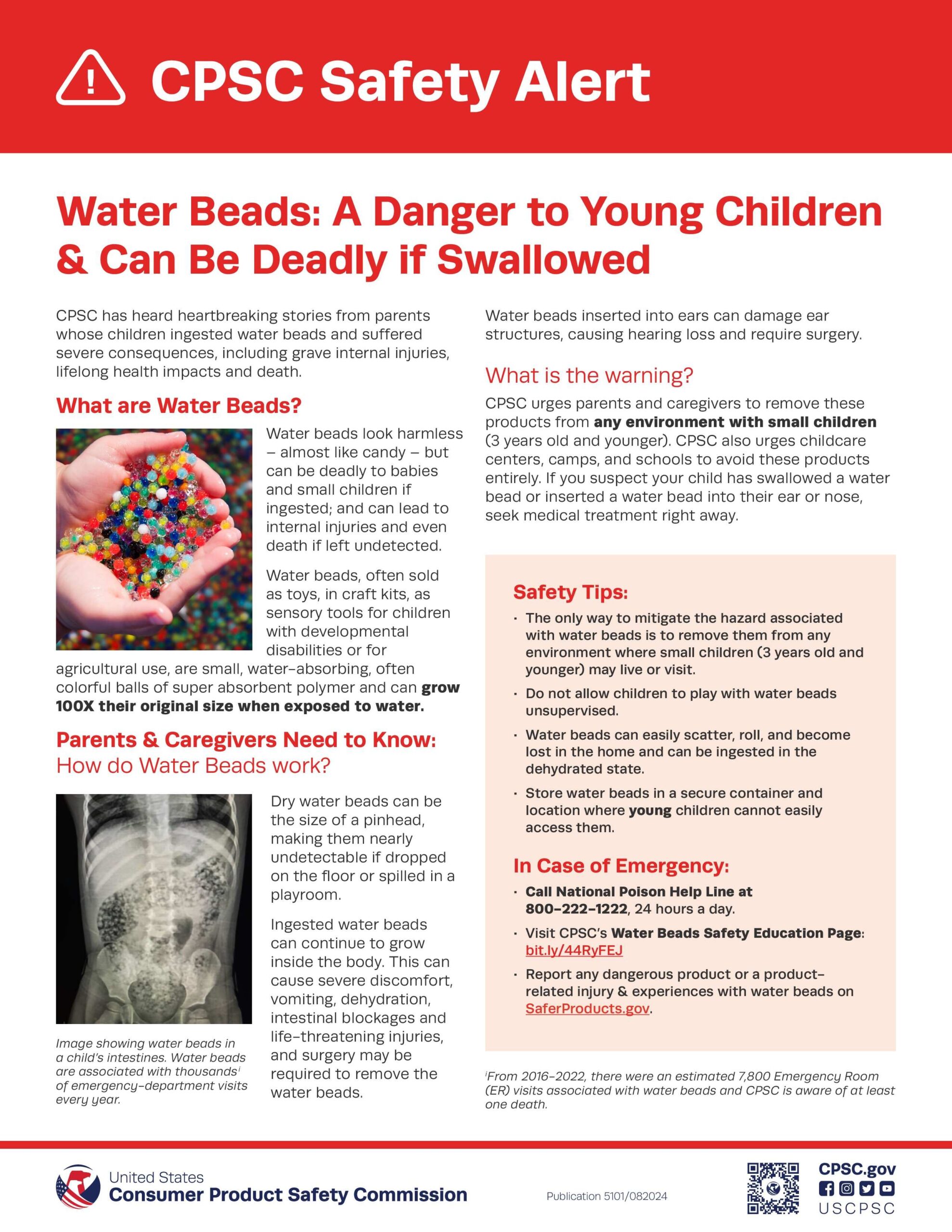
ในช่วงหลายปีที่ผ่านมา คุณพ่อคุณแม่หลายคนอาจคุ้นเคยกับ “เม็ดบีดดูดน้ำ” (Water Beads) ที่เด็กๆ ชอบเล่นเพื่อกระตุ้นประสาทสัมผัส แต่รู้หรือไม่? วัตถุสีสันสวยงามคล้ายลูกอมเหล่านี้กำลังกลายเป็นภัยเงียบที่อันตรายต่อลูกน้อยของคุณ โดยเฉพาะเด็กอายุต่ำกว่า 6 ขวบ ข้อมูลจากศูนย์วิจัยและนโยบายการบาดเจ็บเด็ก ประเทศสหรัฐอเมริกา เผยว่า จำนวนเด็กที่เข้ารับการรักษาในห้องฉุกเฉินจากการกลืนหรือนำเม็ดบีดเข้าหูและจมูกเพิ่มขึ้นอย่างรวดเร็วในช่วงไม่กี่ปีมานี้ เม็ดบีดเมื่ออยู่ในน้ำหรือของเหลวในร่างกายจะขยายตัวใหญ่ขึ้นหลายเท่า ทำให้เกิดการอุดตันในลำไส้ หรือแม้กระทั่งเสียชีวิตได้ แถมยังตรวจไม่พบด้วยเครื่องเอกซเรย์ทั่วไป คุณพ่อคุณแม่ควรต้องระวังอย่างยิ่ง และทำความเข้าใจถึงความเสี่ยงที่ซ่อนอยู่ในของเล่นชิ้นเล็กเหล่านี้ เพื่อปกป้องเจ้าตัวเล็กที่ยังไม่รู้จักอันตราย
เจาะลึกอันตรายของเม็ดบีดดูดน้ำ
พฤติกรรมการสำรวจโลกของเด็กเล็กคือการนำสิ่งของเข้าปากโดยธรรมชาติ เม็ดบีดดูดน้ำมีลักษณะคล้ายลูกอม ยิ่งเพิ่มความน่าดึงดูดให้เด็กหยิบเข้าปาก เมื่อกลืนลงไป เม็ดบีดจะดูดซับน้ำในร่างกายและขยายตัวขึ้นเรื่อยๆ จนมีขนาดใหญ่กว่าตอนแห้งหลายร้อยเท่า ทำให้เกิดการอุดตันในระบบทางเดินอาหาร ซึ่งเป็นภาวะฉุกเฉินที่ต้องผ่าตัดทันที นอกจากนี้ หากเด็กนำเม็ดบีดใส่หูหรือจมูก ก็อาจทำให้เกิดการอักเสบ ติดเชื้อ หรือสูญเสียการได้ยินได้
- ภัยเงียบที่ตรวจไม่พบ:
- คุณสมบัติของเม็ดบีดที่ขยายตัวได้และดูดซับน้ำ ทำให้มองไม่เห็นด้วยการเอกซเรย์ทั่วไป คุณหมออาจวินิจฉัยผิดพลาด หรือต้องใช้เวลานานในการหาสาเหตุของอาการผิดปกติ
- การขายเป็นชุดหมื่นเม็ด:
- เม็ดบีดมักขายเป็นชุดใหญ่จำนวนนับหมื่นเม็ด เมื่อเด็กเล่นเสร็จ เม็ดเล็กๆ ที่หลุดหายไปตามพื้นหรือซอกมุมอาจไม่ถูกพบจนกระทั่งเด็กอีกคนหนึ่งมาเจอและนำเข้าปาก ซึ่งเพิ่มความเสี่ยงอย่างมาก
- ข้อมูลจากรายงานการศึกษา:
- จากข้อมูลของ U.S. Consumer Product Safety Commission (CPSC) ระบุว่า ระหว่างปี 2018-2022 มีเด็กเกือบ 7,000 คน ในสหรัฐฯ ที่ได้รับบาดเจ็บจากการกลืนเม็ดบีด และต้องเข้ารับการรักษาในห้องฉุกเฉิน โดยตัวเลขเพิ่มขึ้นอย่างต่อเนื่องทุกปี
- คำแนะนำจากแพทย์ผู้เชี่ยวชาญ:
- Dr. Gary Smith ผู้อำนวยการศูนย์วิจัยและนโยบายการบาดเจ็บเด็ก กล่าวว่า “ไม่ว่าผลิตภัณฑ์นี้จะถูกวางตลาดเป็นของเล่นเพื่อการศึกษา หรือของเล่นยิงปืน อันตรายจากคุณสมบัติการขยายตัวก็เหมือนกัน” ทางออกเดียวคือการป้องกัน: “ถ้ามีเด็กอายุต่ำกว่า 6 ขวบ หรือเด็กที่มีพัฒนาการช้าอยู่ในบ้าน ควรเก็บเม็ดบีดออกไปจากบ้านให้หมด และพูดคุยกับครูสอนเด็ก เธอราปิสต์ หรือผู้ดูแลเด็กคนอื่นๆ เพื่อให้เลิกใช้ผลิตภัณฑ์นี้”
การเลี้ยงลูกและดูแลทารกอย่างปลอดภัยในยุคนี้
การปกป้องลูกน้อยจากอันตรายที่ไม่คาดคิดเป็นหน้าที่สำคัญของคุณพ่อคุณแม่ การรู้เท่าทันความเสี่ยงของของเล่นบางประเภทจะช่วยให้คุณตัดสินใจได้ดีขึ้น นอกจากการหลีกเลี่ยงเม็ดบีดแล้ว ควรตรวจสอบของเล่นทุกชิ้นในบ้านว่ามีชิ้นส่วนเล็กๆ ที่หลุดออกได้ง่ายหรือไม่ เลือกของเล่นที่เหมาะกับวัย และที่สำคัญคือเฝ้าดูขณะเด็กเล่นอยู่เสมอ การสร้างสภาพแวดล้อมที่ปลอดภัยเป็นพื้นฐานสำคัญของพัฒนาการที่ดี หากลูกมีอาการผิดปกติเช่น ปวดท้องรุนแรง อาเจียน ไม่ถ่าย หรือมีสิ่งแปลกปลอมในช่องหู รีบพาไปพบแพทย์ทันทีและแจ้งประวัติการเล่นของเล่นเม็ดบีดให้หมอทราบ
คำถามที่พบบ่อย (FAQ)
คำถามที่ 1: เม็ดบีดดูดน้ำมีกี่ประเภทที่อันตรายต่อเด็ก?
คำตอบ: เม็ดบีดที่อันตรายมีหลายประเภท ไม่ว่าจะเป็นแบบที่ขายเป็นของเล่นกระตุ้นสัมผัส (sensory play) เม็ดกระสุนปืนยิงเล่น (gel blaster) หรือเม็ดบีดสำหรับตกแต่ง โดยทุกประเภทมีคุณสมบัติเหมือนกันคือสามารถขยายตัวได้หลายร้อยเท่าเมื่อสัมผัสน้ำหรือของเหลวในร่างกาย นอกจากนี้ยังมีรายงานว่าเม็ดบีดบางยี่ห้อปนเปื้อนสารอะคริลาไมด์ (acrylamide) ซึ่งเป็นสารก่อมะเร็ง
คำถามที่ 2: ถ้าลูกกลืนเม็ดบีดเข้าไป ควรทำอย่างไร?
คำตอบ: หากสงสัยว่าลูกกลืนเม็ดบีดเข้าไป สิ่งแรกคือต้องตั้งสติ ห้ามทำให้อาเจียนเด็ดขาด เพราะอาจทำให้เม็ดบีดขยายตัวในหลอดอาหารและอุดกั้นทางเดินหายใจ ให้รีบพาลูกไปโรงพยาบาลโดยเร็วที่สุด และแจ้งประวัติให้แพทย์ทราบทันทีว่าเด็กอาจกลืนเม็ดบีดดูดน้ำเข้าไป ซึ่งเป็นข้อมูลสำคัญที่ช่วยในการวินิจฉัย เนื่องจากเม็ดบีดตรวจไม่พบด้วย X-ray ทั่วไป
Full English Article: The Invisible Danger of Water Beads for Your Child
In recent years, many parents have become familiar with “water beads” (or hydrogel beads) as a popular sensory play toy for children. However, these colorful, candy-like objects are increasingly becoming a silent hazard for young children, especially those under six years old. Data from the Center for Injury Research and Policy at Nationwide Children’s Hospital reveals a rapid rise in emergency room visits for children who have swallowed or inserted water beads into their ears or noses. Once inside the body, these beads can expand to hundreds of times their original size after contact with fluids, leading to life-threatening intestinal blockages or hearing damage. What makes them particularly dangerous is that they are nearly invisible on standard X-rays.
Deep Dive Analysis: Why Water Beads Are a Unique Threat
- The Invisible Hazard:
- The superabsorbent polymer material that makes water beads expand also makes them radiolucent, meaning they are hard to detect using X-rays. This can delay diagnosis and treatment when a child has ingested them, leading to more severe complications.
- Massive Quantities Increase Risk:
- Water beads are often sold in sets of tens of thousands. When a few beads are misplaced around the home, they are unlikely to be noticed until a curious child finds them and puts them in their mouth. This high “miss rate” is a key factor in the rising number of incidents.
- Expert Warnings:
- Dr. Gary Smith, senior author of the study, emphasizes that regardless of the marketing strategy (sensory toy, gel blaster ammunition, or decoration), the core hazard remains the same: “the expanding nature of the bead.” He calls for stricter regulations focused on this primary characteristic.
- Dr. Hannah Hays adds that many childcare professionals are unaware of the danger. She advises parents to speak with daycare directors and preschool teachers to discourage the use of water beads if children under six or children with developmental delays are present. “If children younger than six years or children with developmental delays live in or visit your home, keep water beads out of your home.”
- Beyond Ingestion:
- The U.S. Consumer Product Safety Commission (CPSC) also warns that water beads can contain acrylamide, a known carcinogen, violating the Federal Hazardous Substances Act. Furthermore, injuries from insertion into ears or noses can cause severe pain, infection, and require surgical removal under anesthesia.
Parental Guidance for Safe Child Development
Protecting your child from unexpected dangers requires vigilance and informed decision-making. Here are key steps for safe parenting in this context:
- Eliminate the Risk: The safest approach is to keep water beads out of your home entirely if you have children under six or children with developmental delays.
- Educate Caregivers: Talk to your childcare providers, teachers, and therapists about the dangers of water beads. Encourage them to find safer alternatives for sensory play, such as rice, beans, or sand.
- Monitor Play: Always supervise young children during playtime. Check toys for any loose small parts.
- Know the Symptoms: If your child shows signs of a bowel obstruction (severe abdominal pain, vomiting, constipation), ear pain, or nasal discharge after playing, seek immediate medical attention and inform the doctor about possible water bead exposure.
Reference:
Study from Center for Injury Research and Policy at Nationwide Children’s Hospital