
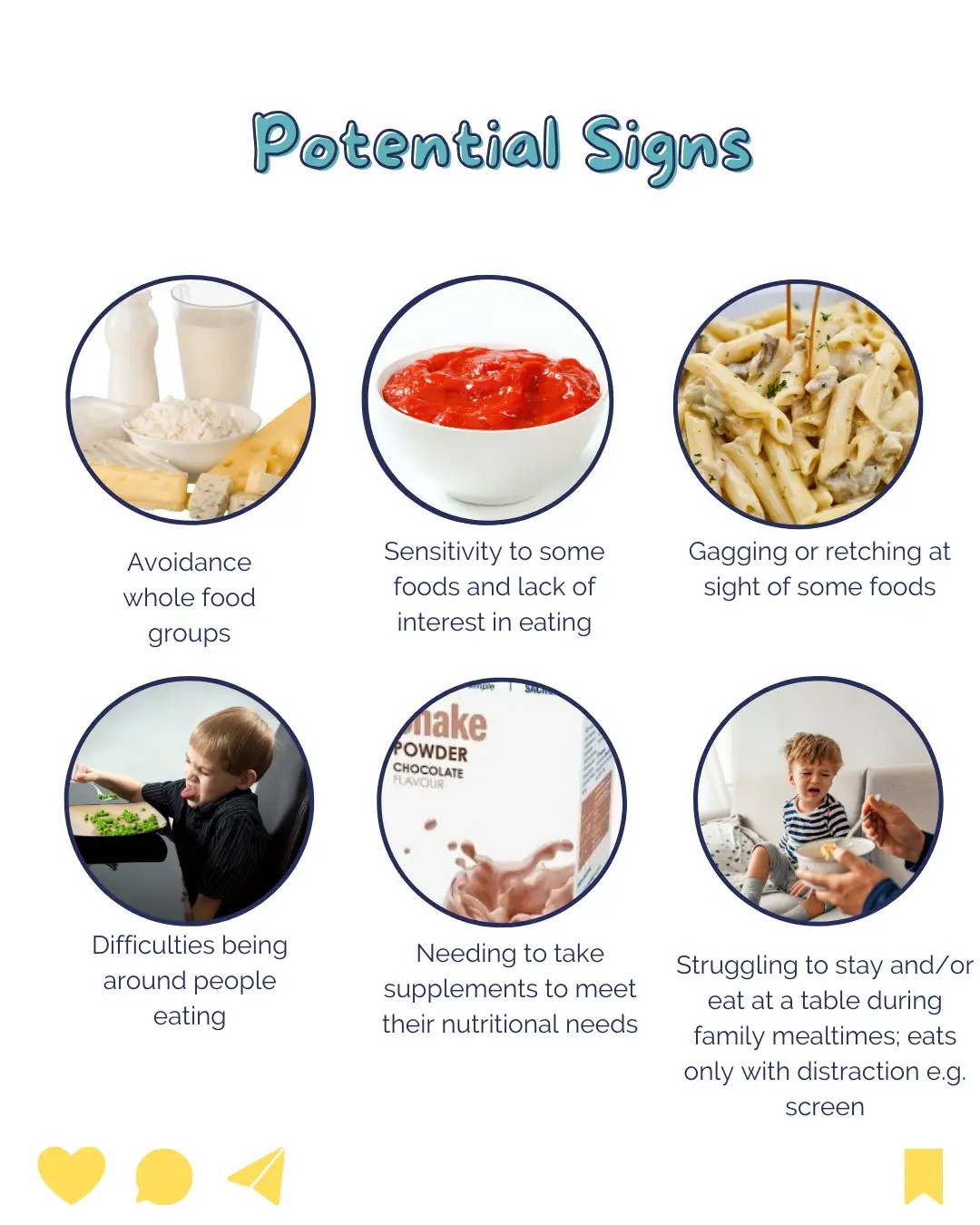
วิธีป้อนอาหารเด็กที่มีภาวะ ARFID (Avoidant Restrictive Food Intake Disorder)
สำหรับพ่อแม่ที่กำลังเผชิญกับความท้าทายในการป้อนอาหารลูกที่มีภาวะ ARFID สิ่งสำคัญที่สุดคือการเข้าใจว่าเด็กเหล่านี้ไม่ได้แค่ “ดื้อ” หรือ “เลือกกิน” แต่พวกเขามีความไวต่อประสาทสัมผัสที่เหนือกว่าคนทั่วไป ทำให้อาหารบางชนิดกลายเป็นประสบการณ์ที่ overwhelming และน่ากลัว
เราจะพาคุณพ่อคุณแม่ไปทำความเข้าใจและปรับใช้เทคนิคที่ช่วยให้มื้ออาหารกลับมาเป็นช่วงเวลาแห่งความอบอุ่นและปลอดภัยอีกครั้ง โดยเน้นที่การพัฒนาพัฒนาการของลูก การเลี้ยงดูอย่างเข้าใจ และการดูแลสุขภาพทารกและเด็กเล็ก
- ให้ความสำคัญกับปริมาณมากกว่าความหลากหลาย: ก่อนอื่นต้องทำให้ลูกรับประทานอาหารที่เขาชอบให้เพียงพอต่อความต้องการของร่างกายก่อน แม้จะเป็นแค่พาสต้า เฟรนช์ฟราย หรือขนมหวานก็ตาม เพราะการกินอะไรสักอย่างสำคัญที่สุด
- ลดความเครียดในมื้ออาหาร: เด็กที่มีภาวะ ARFID มี “พลังพิเศษทางประสาทสัมผัส” ทำให้พวกเขาถูกกระตุ้นได้ง่าย จงสร้างประสบการณ์มื้ออาหารที่สงบ ไม่กดดัน และอบอุ่น เพื่อสร้างความทรงจำเชิงบวก
- ป้อนอาหารเป็นประจำทุก 2-3 ชั่วโมง: วางแผนให้ลูกได้กิน 5-6 ครั้งต่อวัน (3 มื้อหลัก และ 2-3 มื้อว่าง) อย่ารอให้ลูกร้องขอ เพราะเด็กเหล่านี้อาจไม่มีสัญญาณความหิวที่ชัดเจน การทำเช่นนี้ช่วยควบคุมระบบย่อยอาหารและฟื้นฟูสัญญาณความหิว
- เริ่มต้นด้วยการปรับเปลี่ยนอาหารที่ชอบเล็กน้อย: เช่น ถ้าลูกชอบบลูเบอร์รี่สด ลองเปลี่ยนเป็นบลูเบอร์รี่แช่แข็งที่รสชาติอ่อนกว่าและเนื้อสัมผัสแน่นอน หรือลองผลไม้อบแห้ง แครกเกอร์ผัก เพื่อเป็นสะพานเชื่อมไปสู่อาหารชนิดอื่น
- เป็นแบบอย่างที่ดี: กินอาหารหลากหลายต่อหน้าลูก และรักษาบรรยากาศที่สนุกสนานในมื้ออาหารของครอบครัว โดยไม่บังคับให้ลูกกิน
- ให้รางวัลกับพฤติกรรมการกินเชิงบวก: ชื่นชมเมื่อลูกลองชิมอาหารใหม่ๆ แม้เพียงเล็กน้อย และหาวิธีจัดการความวิตกกังวล เช่น การหายใจลึกๆ หรือการฟังเพลงร่วมกัน
- ขอความช่วยเหลือจากทีมสหวิชาชีพ: ปรึกษาแพทย์ นักกำหนดอาหาร นักกิจกรรมบำบัด หรือนักจิตวิทยาที่เชี่ยวชาญด้าน ARFID เพื่อวางแผนการรักษาที่เหมาะสม
คำถามที่พบบ่อย (FAQs)
Full English Translation
How to Feed a Child with ARFID (Avoidant Restrictive Food Intake Disorder)
For parents facing the challenge of feeding a child with ARFID, the most important thing is to understand that these children are not simply being “stubborn” or “picky eaters.” They have heightened sensory sensitivities that make certain foods overwhelming and frightening.
We will guide you in understanding and applying techniques that transform mealtimes back into warm, safe moments. This focuses on child development, empathetic parenting, newborn care, and baby health.
- Prioritize volume over variety: First, ensure your child eats enough of their preferred foods to meet their body’s needs, even if it’s just pasta, french fries, or sweets. Eating something is of utmost importance.
- Reduce mealtime stress: Children with ARFID have “sensory superpowers” and are easily overwhelmed. Create calm, low-pressure, and warm eating experiences to build positive memories.
- Feed regularly every 2-3 hours: Plan 5-6 eating episodes per day (3 meals and 2-3 snacks). Don’t wait for your child to ask, as they may lack reliable hunger cues. This helps regulate digestion and restore hunger signals.
- Start with slight variations of preferred foods: If your child likes fresh blueberries, try frozen blueberries (milder flavor, consistent texture) or dried fruit, veggie straws, etc., as a bridge to other foods.
- Be a positive role model: Eat a variety of foods in front of your child and maintain a pleasant family mealtime atmosphere without forcing them to eat.
- Reward positive eating behaviors: Praise them when they try new foods, even a tiny bite. Manage anxiety together through deep breathing or listening to music.
- Seek multidisciplinary professional help: Consult a doctor, dietitian, occupational therapist, or psychologist specializing in ARFID to create a tailored treatment plan.
Citation Link
Source: What to Feed a Child with ARFID – Eating Disorder Therapy LA

