Failure to Launch Syndrome: เมื่อลูกโตแล้วแต่ยังไม่พร้อมจะออกจากบ้าน
ในสังคมปัจจุบัน เราเริ่มได้ยินคำว่า “Failure to Launch Syndrome” หรือ “กลุ่มอาการติดบ้าน ติดพ่อแม่” มากขึ้น โดยเฉพาะในกลุ่มคนรุ่นใหม่ที่อายุ 20-30 ปี แต่ยังคงใช้ชีวิตพึ่งพาพ่อแม่อย่างเต็มที่ ไม่ได้เรียนหนังสือ ไม่ได้ทำงาน และไม่ได้ช่วยเหลือตัวเองหรือครอบครัว แม้คำนี้จะไม่ใช่การวินิจฉัยทางการแพทย์อย่างเป็นทางการ แต่มันสะท้อนถึงปัญหาทางจิตใจและพัฒนาการที่สำคัญ ซึ่งพ่อแม่และผู้เลี้ยงดูควรทำความเข้าใจอย่างลึกซึ้ง
เจาะลึกจากมุมมองพัฒนาการเด็กและการเลี้ยงดู
การที่ลูกไม่สามารถ “ออกจากรัง” ได้นั้น ไม่ใช่ความผิดของใครคนใดคนหนึ่ง แต่เป็นผลจากปัจจัยหลายด้านที่ซ้อนกัน ทั้งด้านจิตใจ สังคม และครอบครัว เราจะพามาดูรายละเอียดที่ควรรู้
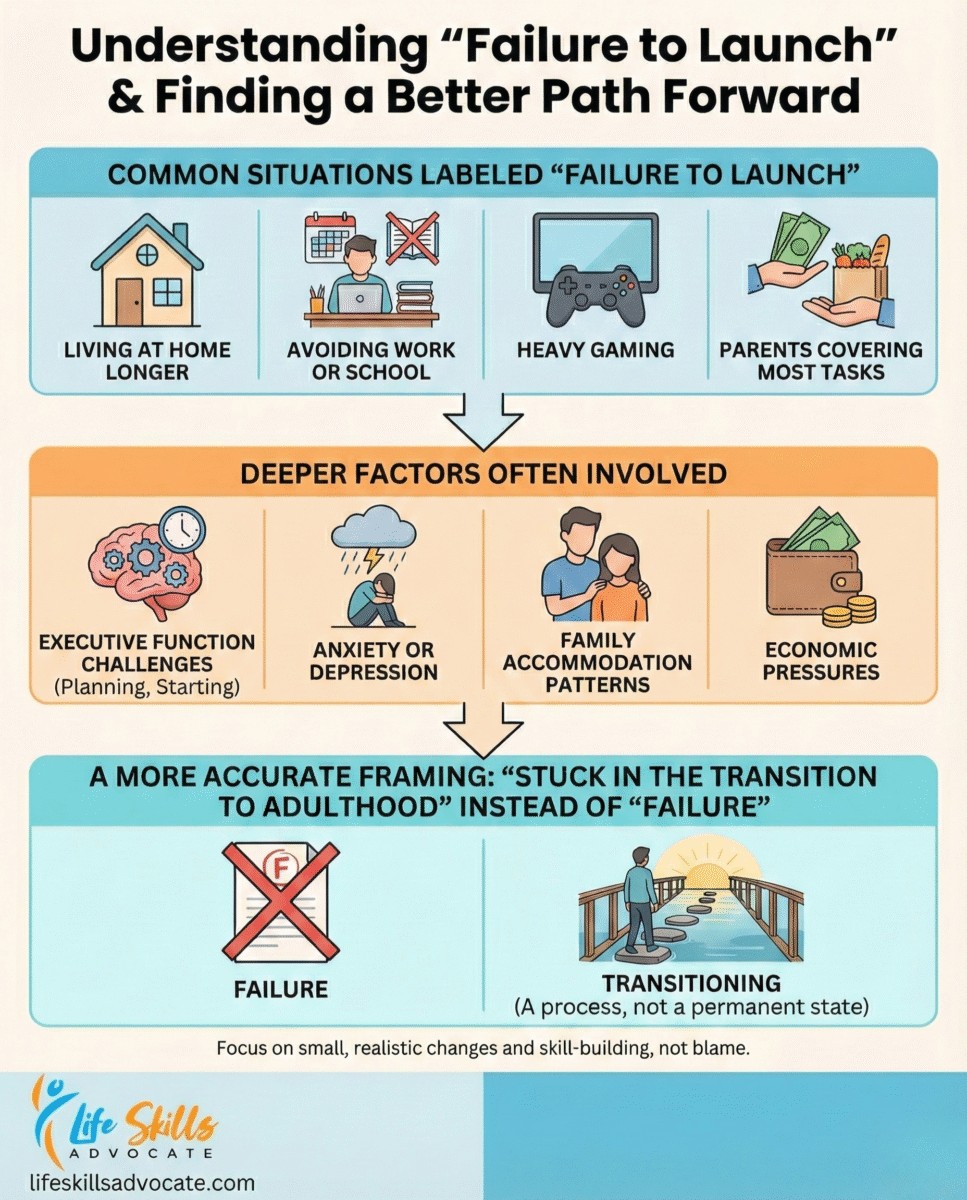
- สาเหตุหลักที่พบบ่อย: ความวิตกกังวล (Anxiety) และภาวะซึมเศร้า (Depression) เป็นปัจจัยสำคัญที่สุด โดยเฉพาะหลังจากช่วงโควิด-19 ที่ส่งผลต่อสุขภาพจิตของคนหนุ่มสาวมากกว่าช่วงวัยอื่นๆ
- ลักษณะที่สังเกตได้: ลูกอาจแสดงอาการเฉื่อยชา ขาดแรงจูงใจ หลีกเลี่ยงความรับผิดชอบ ถอนตัวจากสังคม และมีทักษะการสื่อสารที่จำกัด
- ผลกระทบต่อครอบครัว: นอกจากลูกจะไม่สามารถพึ่งพาตนเองได้แล้ว ยังสร้างความเครียดและความกังวลให้กับพ่อแม่ที่ต้องแบกรับภาระทั้งด้านการเงินและจิตใจ
- แนวทางช่วยเหลือ: การบำบัดทางจิตวิทยาร่วมกับการฝึกทักษะชีวิต (Life Skills Training) และการแก้ไขปัญหาสุขภาพจิตที่ซ่อนอยู่ เช่น โรควิตกกังวล หรือภาวะซึมเศร้า เป็นหนทางที่มีประสิทธิภาพที่สุด
- บทบาทของครอบครัว: ปฏิกิริยาของครอบครัวเป็นส่วนสำคัญของพลวัตนี้ การให้กำลังใจ การตั้งขอบเขตที่ชัดเจน และการสนับสนุนให้ลูกค่อยๆ รับผิดชอบชีวิตตนเอง จะช่วยให้ลูกก้าวข้ามผ่านช่วงเวลานี้ไปได้
คำถามที่พบบ่อย (FAQs)
English Translation:
Failure to Launch Syndrome: When Your Child Is Grown but Not Ready to Leave Home
In today’s society, we hear more about “Failure to Launch Syndrome,” especially among young adults aged 20-30 who remain fully dependent on their parents—not studying, not working, and not taking care of themselves or contributing to the household. Although this term is not an official medical diagnosis, it reflects significant psychological and developmental issues that parents and caregivers should understand deeply.
Deep Dive from a Child Development and Parenting Perspective
The inability of a child to “leave the nest” is not anyone’s fault but results from multiple intertwined factors—psychological, social, and familial. Here are key details to know:
- Main Causes: Anxiety and depression are the most significant factors, especially after the COVID-19 pandemic, which impacted young adults’ mental health more than any other age group.
- Observable Signs: The child may show passivity, lack of motivation, avoidance of responsibility, social withdrawal, and poor communication skills.
- Impact on Family: Besides the child’s inability to be self-reliant, it creates stress and worry for parents who bear both financial and emotional burdens.
- How to Help: Psychological therapy combined with life skills training and addressing underlying mental health issues like anxiety or depression is the most effective approach.
- Role of Family: The family’s reaction is a crucial part of the dynamic. Encouragement, setting clear boundaries, and supporting the child to gradually take responsibility for their own life will help them move through this period.
Frequently Asked Questions (FAQs)
-
What is Failure to Launch Syndrome, and how is it different from normal multigenerational living?
Failure to Launch Syndrome is a label for young adults (ages 18-30) who cannot transition to independent living—they are not studying, working, or supporting themselves or the household. This differs from multigenerational living where the child is still studying, working, or helping with chores. -
What should parents do when their child shows signs of Failure to Launch?
Parents should start with an understanding and non-judgmental conversation, then gradually set clear rules and boundaries, such as requiring the child to help with chores or find a job. If the issue is deep-rooted, consult a psychologist or therapist specializing in adolescents and young adults, combined with life skills training and managing anxiety.
Citation Link: Newport Institute: Failure to Launch Syndrome